
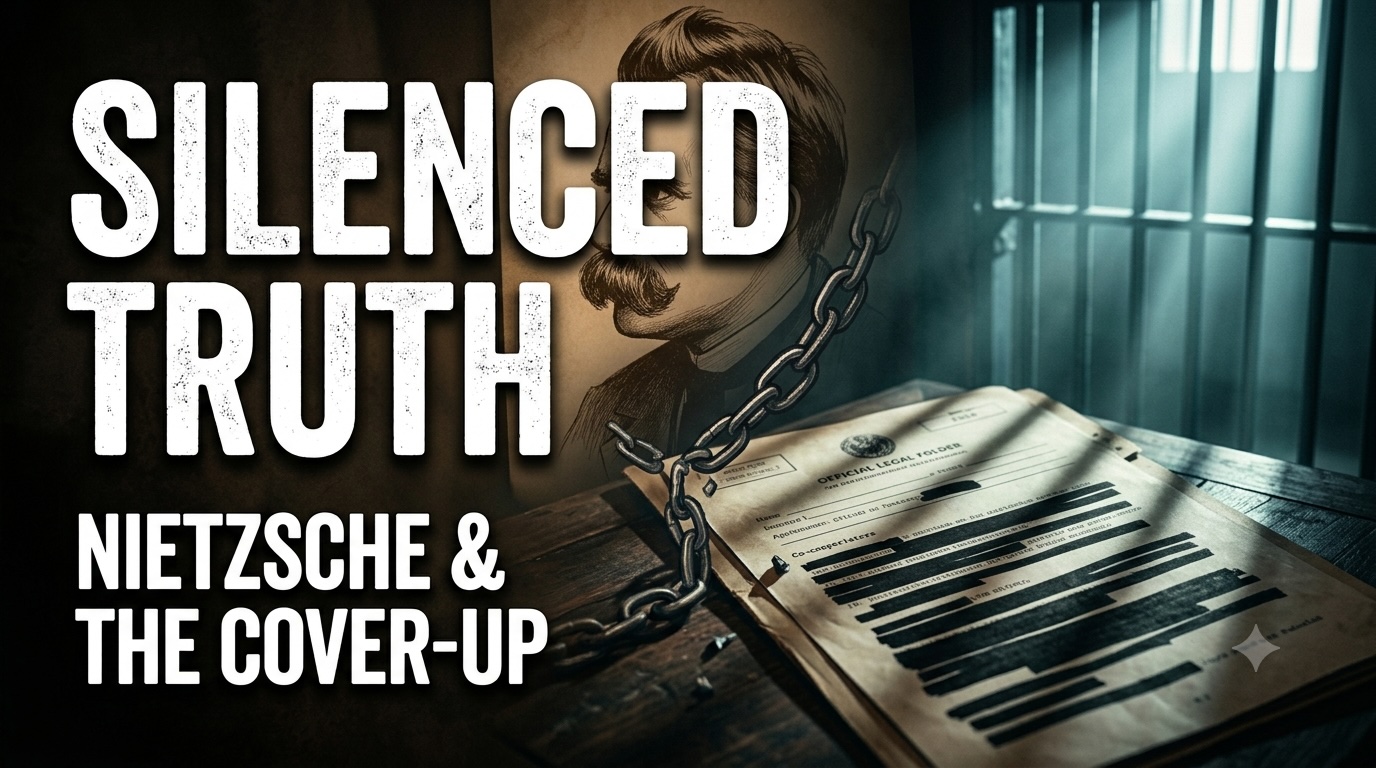


A deep, unfiltered exploration into the blind spots of modern society—where algorithmic convenience meets philosophical entrapment and bureaucratic silence. Based on a raw, two-part recorded dialogue, this reflection examines how institutional power operates when unchallenged, why artificial intelligence inherently dilutes human nuance, and how Friedrich Nietzsche’s critique of conformity remains urgent today.
In an age dominated by curated narratives and streamlined digital production, genuine human discourse is increasingly pushed to the margins. In a comprehensive long-form conversation titled Silenced Truth: Nietzsche, Institutional Power & Modern Enslavement, two thinkers step away from conventional soundbites to interrogate the systemic structures governing thought, freedom, and institutional authority.
What begins as an honest assessment of creative workflows and the flattening effect of artificial intelligence quickly deepens into an uncompromising examination of institutional power—from the international shadows of the Epstein files to the quiet, clinical mechanics of involuntary detention within Switzerland.
The Limits of the Machine: Why AI Waters Down Reality
The dialogue opens with a necessary creative critique: the increasing reliance on artificial intelligence in intellectual and literary projects. While algorithms excel at synthesis, they suffer from an inherent tendency to flatten, sanitize, and dilute complex ideas into sterile corporate neutrality.
True intellectual friction cannot be automated. When writing about vulnerability, legal battles, or existential despair, mechanical consensus strips away the raw edge required to convey lived experience. The takeaway is clear: machines can organize information, but they cannot bear witness to human truth.
Modern Enslavement and Nietzsche’s Warning
Drawing directly from the philosophy of Friedrich Nietzsche, the conversation pivots to how contemporary citizens submit to systemic conditioning without resistance. Modern enslavement no longer relies on physical iron alone; it functions through cultural consensus, bureaucratic compliance, and administrative routine.
Society trains individuals to defend the very systems that constrain them. When people lose awareness of their own chains, dissent is no longer punished by physical force—it is simply pathologized, ignored, or rendered socially invisible.
Redacted Realities: From Epstein to Institutional Distraction
Public attention is easily redirected. By analyzing high-profile legal controversies, including the heavily redacted files surrounding the Jeffrey Epstein network, the discussion highlights how systemic abuse is often hidden in plain sight.
Public outrage is briefly permitted, only to be diffused through endless procedural delays, blacked-out documents, and media spectacles designed to exhaust public scrutiny. Institutional power preserves itself not by disproving allegations, but by outlasting collective memory.
Institutional Deprivation of Freedom: The Reality of FU in Switzerland
Perhaps the most critical and grounded segment of the dialogue centers on the Swiss legal mechanism of Fürsorgerische Unterbringung (FU)—involuntary institutional placement.
Under the guise of protection and care, administrative decisions can strip an individual of fundamental personal autonomy with alarming speed. The conversation examines the troubling overlap between medical authority, administrative convenience, and civil law:
- How vulnerable individuals are caught in circular legal jurisdictions.
- The stark reality of clinical detention where normal human frustration is interpreted as medical pathology.
- The structural difficulty ordinary citizens face when attempting to challenge institutional diagnoses and secure legal release.
Reclaiming Perspective: Guidance, Realism, and Moving Forward
Rather than remaining in critique, the dialogue shifts toward actionable clarity. When dealing with troubled youth or personal crises, the speakers stress the importance of brutal honesty over family denial and comforting illusions.
Whether dissecting the social dynamics analyzed by authors like Esther Vilar or debating educational stagnation, the core conclusion remains steadfast: liberation begins with calling things by their real names. Moving forward requires stepping outside administrative comfort zones, publishing without waiting for artificial perfection, and refusing to let institutional silence dictate the boundaries of truth.
